
- Prohibitively high rents are changing the dynamics of flatsharing: fewer under 25s are leaving home; older renters are being priced out of both homeownership and renting solo.
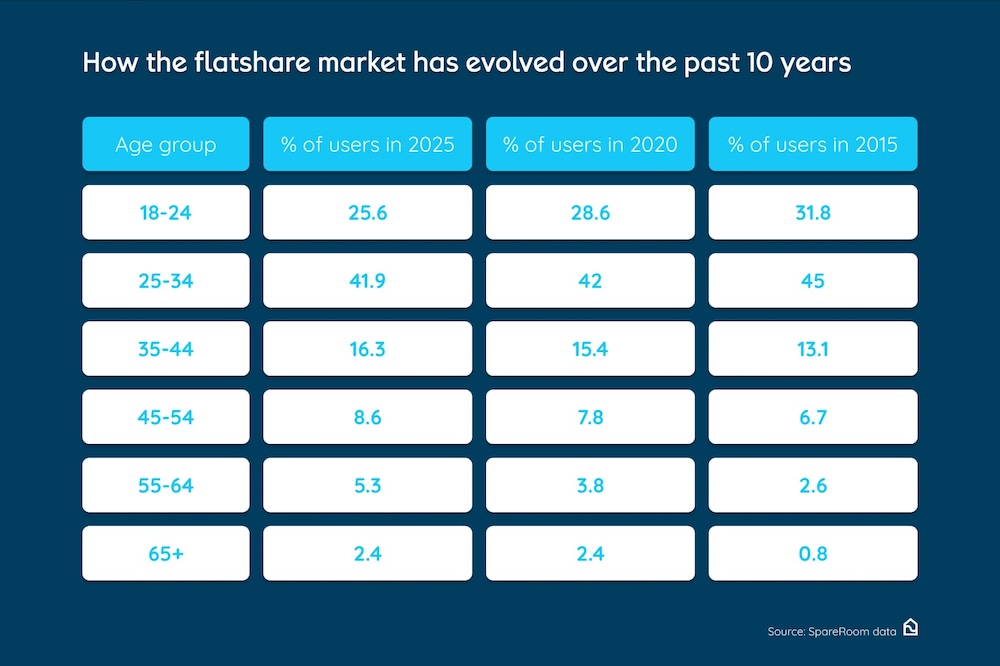
- Under 25s now make up just over a quarter (26%) of the flatshare market, down from almost a third (32%) a decade ago.
- Renters aged 45+ now make up 16% of the flatshare market, up from 10% in 2015.
- The proportion of flatsharers aged 65+ has tripled in the past decade.
- Almost four in 10 flatmates now live in multi-generational households, where the age difference between the oldest and youngest adult is 20 years or more.

Steep increases in UK room rents are diminishing savings and keeping older renters in shared homes for longer, while creating a barrier to entry for younger renters, according to new data from flatshare site SpareRoom. As a result, under 35s in the flatshare market are in decline while those aged 35+ are rising.
In the past five years, UK rents have risen 29% to £749 per month, hitting a record high of £753 per month in Q3 20251. With the average gross salary needed to rent a room affordably now close to £30K2, many young people just starting out in their careers have no choice but to stay in the family home, and delay flying the nest. Consequently, under 25s now make up just over a quarter (26%) of the flatshare market, down from almost a third (32%) in 2015.
The most represented age group is still 25 to 34-year-olds - making up 42% of the flatshare market - but they are in decline. A decade ago, this group was 45% of the market.
Meanwhile, those in their late 40s, who would have once left flatsharing behind, either to get on the property ladder or to rent solo, have been quietly increasing. Users aged 45+ now make up 16% of the flatshare market, up from 10% in 2015.
But the biggest increase of all has been among the oldest users. Although over 65s represent just 2.4% of all flatsharers, that percentage has tripled in the past decade from 0.8%. The proportion of 55 to 64-year-olds has more than doubled from 2.6% to 5.3%.
And, as more people approach retirement without enough money saved, the number of over 65s sharing their homes with lodgers is increasing too: there has been a 38% increase over the past two years.
According to a January 2026 survey of 3,564 flatmates by SpareRoom, 38% now live in multi-generational households, where the age difference between the oldest and youngest adult is 20 years or more. Close to a quarter (23%) have - or are - flatmates with a 30+ year age gap between them.
Matt Hutchinson, director of flatshare site SpareRoom, comments: “It used to be the case that multi-generational households were a rarity in flatsharing. The market was dominated by groups of twenty and thirty-somethings chasing jobs and opportunities in cities and major towns.
“Today, unaffordably high rents are shifting household dynamics as well as changing the geography of flatsharing too. The youngest are being priced out of the rental market altogether, as older renters are priced out of home ownership or renting solo. Meanwhile, those priced out of cities are migrating to more affordable suburban towns.
“The market adapts but the long-term picture is concerning, as the UK is not a country that's geared towards renting for life. Those who haven't built equity in property could be much worse off in their retirement years unless something changes dramatically.”