
- Lodger landlords contribute almost a quarter (24%) of all UK flatshare supply, yet households looking to rent out rooms to lodgers fell in the year to Q2 2026 and numbers have been flatlining for two years.
- Meanwhile flatshare supply across the UK has entered negative growth, and room rents have hit record highs in six out of the UK's nine regions in the same quarter the Renters' Rights Act came into effect1.
- With ~28 million empty bedrooms in England, Wales and Scotland, freeing up just 5% would provide rented accommodation for 1.4 million people2.
- Ahead of the Budget, SpareRoom calls on the Chancellor to reduce intense pressure on the rental market by raising the Rent a Room scheme threshold to £11,000 per year and closing the loophole that allows holiday lets to benefit.
The most affordable way to rent is to share, yet flatshare supply is now in decline, having fallen 3.2% in the year to Q21. But data from flatshare site SpareRoom shows the decline isn't limited to landlords affected by the Renters' Rights Act; also in decline are rooms advertised by so called 'live-in landlords' who rent out rooms in their own homes to lodgers.
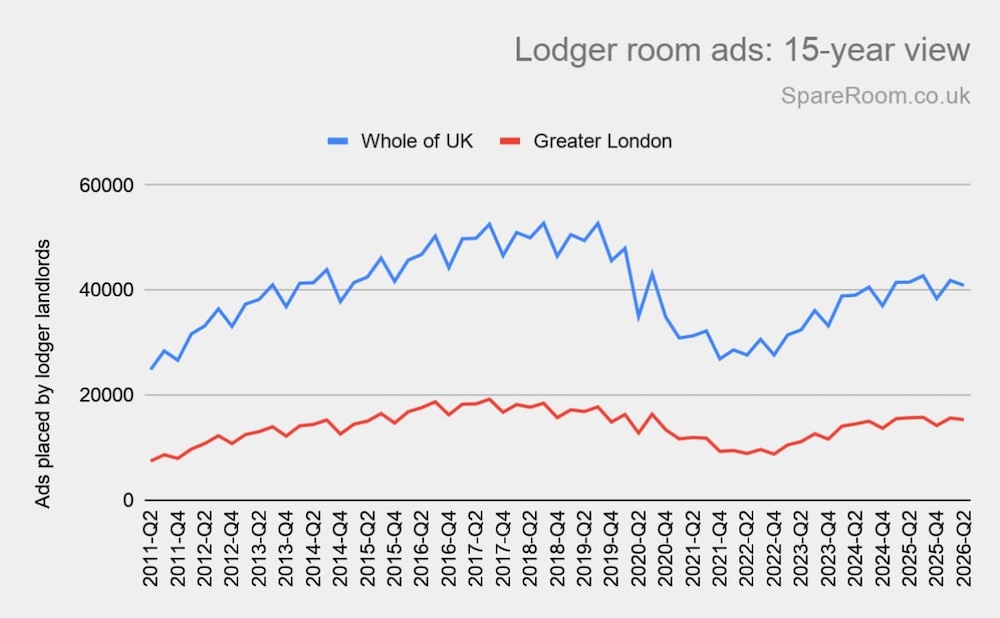
UK lodger room supply fell 1.7% in the year to Q2 and has been flatlining for two years. In Greater London, lodger room supply fell 2.6% in the same period.
The chart below shows lodger room ads over the past 15 years. These rooms were in growth after the tax-free threshold was last raised in April 2016 (announced in the 2015 Budget), peaking in Q3 2018. Following a steep drop caused by Covid-19, supply has never reverted to pre-pandemic levels.
However, there are an estimated 28 million empty bedrooms in England, Wales and Scotland, and freeing up just 5% of them would provide desperately-needed rented accommodation for 1.4 million people.
Renting as a lodger is also slightly cheaper. The average UK room rent is currently £761 per month, but the average UK room rent based on lodger ads alone is £729 per month, an annual saving on rent of £385. In Greater London where the average monthly rent is now £915, the annual saving for renting as a lodger at £867 per month is £569 per year.
In the past 12 months, almost a third (32%) of UK renters and 35% of London renters have been uprooted by rising prices, forced to move because their rent was no longer affordable. Just 15% of UK renters and 13% of London renters spend less than 30% of their pay on rent, excluding bills3.
Matt Hutchinson, director of flatshare site SpareRoom, comments: “Supply is down, which has already forced room rents to record highs in most regions. The trouble is, rents were already well above the ceiling of affordability for far too many people. Flatsharing is the cheapest way to rent, so when room rents are out of reach, people are running out of options.
“Incentivising the use of under-occupied housing stock is a no-brainer and may be the fastest way to reduce intense pressure in the rental market, while boosting household finances, too. There are two ways to do that: increase the tax-free income threshold to reflect rents today, not in 2016, and add a 31-day minimum stay requirement to the scheme's terms, closing the loophole that allows people offering holiday lets to benefit from this tax relief. We have a housing crisis, not a hotel room crisis.
“Raising the threshold alone won't solve the housing crisis, but it will definitely help, and the effect is immediate, unlike house building which takes years to make a difference.”