
- Those relied upon to keep the city functioning, including nursery and care workers, cleaners, ambulance drivers and labourers, can no longer rent affordably in London.
- Londoners earning the National Living Wage would need to work 63 hours per week to spend no more than 30% of their wages on housing costs1.
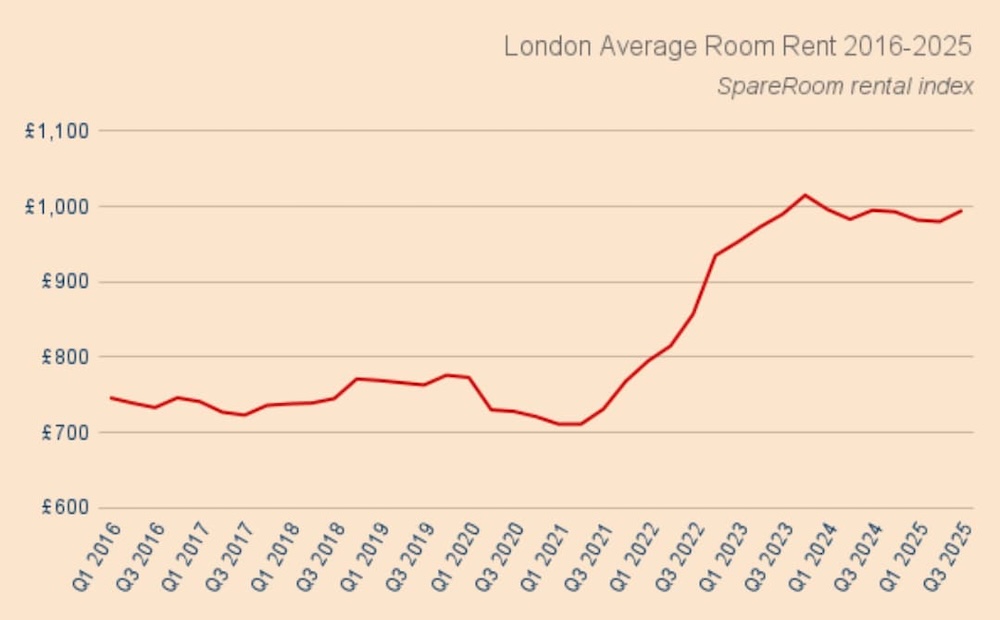
- A gross salary of at least £39,804 per year is needed to affordably rent an average room in London at £995 per month, well above the average pay of many essential and frontline workers.
Londoners earning the National Living Wage of £12.21 per hour would have to work 63 hours per week - not far off two full-time jobs - to keep within affordability guidelines and spend no more than 30% of their wages on housing costs, according to an analysis by flatshare site SpareRoom.
If the Government does increase the National Living Wage to £12.70 in the Budget, as has been reported, Londoners would still have to work 60 hours a week to spend no more than 30% of income on rent2.
The cheapest way to rent is in shared accommodation, and yet even those on the higher London Living Wage of £14.80 per hour - which is optional, not mandatory for employers in the capital - would still need to work 52 hours per week to cover their rent3.
This means low-paid essential workers are having to spend more like 40% to 50% of their gross wages on rent. For example, a nursery assistant on an average annual salary of £24,420 will spend 49% of their income on rent.
London rents have risen 37% over the past five years to £995 per month in Q3 2025. They first passed the £900 mark in late 2022, peaked in late 2023 at £1,015 per month, and are now approaching £1,000 once more. Huge demand post-pandemic had a steep upward effect on rents in the capital which have never recovered, as shown in the graph below:
The table below shows average London salaries across five essential worker roles and the proportion of income spent on renting an average room in the capital. In all cases, it's far higher than the recommended 30%:
| Average gross annual salaries for London-based essential workers | % of salary spent renting an average room in inner London (£995/month) |
|---|---|
| Nursery assistant: £24,420 | 49% |
| Cleaner: £25,195 | 47% |
| Care worker: £26,175 | 46% |
| Labourer: £26,481 | 45% |
| Ambulance driver: £29,946 | 40% |
Matt Hutchinson, director of flatshare site SpareRoom, comments: “In her Budget, the Chancellor must address the housing crisis. While the Renters' Rights Act brings much needed protections for tenants it does nothing to tackle the problem of already unaffordable rents. Either the Government has to do more to help people meet the high cost of living, or it must look at creative ways to reduce rents quickly. Renters don't have time to wait for housebuilding targets to be met.
“London can't function without its essential workers; they're the lifeblood of the city but, increasingly, they're being priced out. Renter demand continues to build in suburban and commuter towns like Esher, Twickenham and Aldershot, as people head further afield in search of cheaper rents. But long, expensive commutes are not the answer to the capital's housing problems, and especially not for lower-paid shift workers who may be working long or antisocial hours.
“This isn't just a London problem, it's happening in other urban areas too. Cities rely on essential workers, as does the economy. This isn't just an issue for a handful of people, it's becoming a national epidemic.”